

By Heather Melancon (Clinical Services Manager) & Layla Wohlfeiler (Clinical Services Manager)
A student experiences one school day, not a lineup of disconnected specialists.
They move from the classroom to speech therapy to behavioral support and back again. They carry the same challenges, skills, communication needs, and successes with them from one setting to the next. When those supports are fragmented, effectiveness can drop, no matter how skilled each individual provider is.
For a Special Education team, the real differentiator in outcomes isn't simply who you hire. It's how well those professionals work together.
That starts with building a team that understands where each person fits, communicates across disciplines, and works toward shared goals. For school districts, that means staffing decisions have to consider more than credentials and availability. The right clinician also needs to be able to integrate into the team around them.
At Seabright School and Therapy Staffing, we believe staffing for special education means thinking about the whole team, not just the open position.
What Collaboration Is, and What It Isn't
Collaboration starts with three things:
- Shared goals
- Coordination
- Respect for each professional's expertise
It requires professionals to understand what their colleagues are targeting, communicate about what they are seeing, and consider how their own approach can support the work happening elsewhere.
It does not mean role confusion, avoiding difficult conversations, or working in separate silos. There is no place for "us or them" thinking when everyone is supporting the same student.
Consider a student working toward three goals at once:
- An SLP is building sentence structure.
- A BCBA is targeting a behavior goal.
- A teacher is pushing an academic goal.
When each professional works in isolation, they may make progress in their own lane. But their approaches may not reinforce each other.
The student may act out during a language task because no one aligned on how to prompt or reinforce across settings. Progress in one area can actually slow or interrupt progress in another. If a behavior goal isn't supported during a speech and language session, for example, the student may struggle to focus long enough for the SLP's language strategies to take hold.
Now consider what happens when those professionals work together.
The SLP, BCBA, and teacher know what the others are targeting and how they are approaching it. The behavior support makes the student more available to learn language. The language support gives the student a way to communicate frustration instead of acting out. The academic support builds on both.
Progress in one area can speed up progress in the others.
That is what "us or them" thinking costs a team, and what "we" thinking gains.
Role Clarity Is Not the Enemy of Collaboration
Collaboration does not mean everyone does everything.
"Staying in your lane" can be a healthy part of a well-functioning team. Clear roles help prevent burnout, protect professional boundaries, and reduce ethical risk for the professionals involved.
An SLP brings speech and language expertise. A BCBA brings behavioral expertise. An OT brings expertise related to life skills, fine motor, and sensory needs. A teacher brings academic and classroom expertise.
Those distinctions matter.
At the same time, collaboration is an expectation built into many disciplines' professional and ethical standards. Communication across disciplines is part of providing coordinated support, not simply a nice-to-have.
A strong Special Education team can have clearly defined roles while still maintaining a shared understanding of the student's goals and needs.
The question is not whether professionals should stay within their scope. They should.
The question is whether everyone understands how their work connects to the work of the people around them.
No Lens Is Wrong, Just Incomplete Alone
Every professional on a team sees the same student through a different lens.
A teacher may notice academic performance and classroom participation. A BCBA may recognize patterns in behavior. An SLP may identify communication barriers. An OT may see sensory or functional needs. A mental health professional may recognize concerns related to emotional regulation.
None of these perspectives are wrong. None is more important than the others.
The problem comes when each discipline operates in its own bubble, unaware of what the others see through their own professional perspective or lens.
A student's full picture only comes into focus when those lenses are combined.
This is where team communication becomes especially important. A behavior that looks like task avoidance to one professional may be connected to a communication deficit another professional has already identified. A sensory need may explain why a student struggles to participate in an activity. A coping strategy introduced by a mental health professional may help a student use the academic or communication strategies being taught elsewhere.
The more those observations and discipline-specific insights are shared, the more coordinated the support can become.
The Collaboration Spectrum: Where Most Teams Get Stuck
Not every team collaborates at the same level. One useful way to understand the difference is through a three-tier collaboration spectrum: multidisciplinary, interdisciplinary, and transdisciplinary.
Multidisciplinary: Working Side by Side
In a multidisciplinary model, professionals work with the same student but largely in parallel.
Communication may be limited. Each person maintains their own goals, methods, and routines, with minimal coordination between disciplines.
The team members may all be highly skilled, but the student's experience can still feel fragmented.
Interdisciplinary: Coordinating the Work
In an interdisciplinary model, professionals communicate regularly, coordinate their work, and share goals while maintaining clearly defined roles.
This is where teams begin to connect the dots.
The teacher understands the behavior strategies being reinforced. The BCBA understands the classroom routines. The SLP knows how communication strategies are being supported outside the therapy setting.
Each professional retains their expertise while contributing to a shared plan.
Transdisciplinary: Sharing Expertise
In a transdisciplinary model, professionals actively share expertise and problem-solve together to build one unified plan.
This requires a high level of communication and trust. Professionals learn from one another and use their combined expertise to address the student's needs across settings.
For many school teams, the default is multidisciplinary: parallel play, not partnership.
Moving toward more coordinated collaboration does not happen overnight. It requires clear expectations, communication structures, and a team culture that makes collaboration part of the work.
What Aligned Goals Look Like in Practice
Aligned goals should complement each other rather than duplicate each other's work or compete for the student's time and attention.
Consider a few examples:
Behavior + Teacher: A student stays engaged with a classroom task for a set amount of time, using routines the whole team supports.
Behavior + Mental Health: A student independently uses a coping strategy, such as asking for a break, during a stressful moment.
Behavior + OT: A student uses sensory tools to stay regulated and participate in classroom activities.
The pattern is straightforward: each goal supports the others.
When goals are connected, a strategy introduced by one professional has a better chance of being reinforced in another setting. The student gets more consistency throughout the day, and professionals can see how their work contributes to the larger plan.
For districts, that coordination can also make better use of staff time and resources.
Why Collaboration Matters for School Districts
School districts are balancing student needs, staffing availability, budgets, compliance requirements, and the realities of retaining qualified professionals.
- A collaborative team can help address several of those pressures at once.
- Less duplicated effort means better use of staff time and district resources.
- Aligned goals can support faster, more consistent student progress across settings.
Real collaboration can also reduce burnout and support staff retention because professionals have clearer communication, stronger support, and a better understanding of the work happening around them.
Most importantly, students experience continuity rather than contradiction as they move between the classroom, therapy sessions, and home.
A student should not have to navigate a completely different set of expectations every time they move from one part of their day to another.
Staffing for Collaboration, Not Just Headcount
This is an area where the staffing industry can miss an important part of the equation.
Traditional staffing often focuses on placement: matching a credential to an open position, but filling an opening is only one step.
Districts also need to consider how that person will integrate into an existing team's collaboration and communication structure. Will they understand the team's goals? Will they communicate with other disciplines? Will they have the support they need when questions arise? Will the district have a partner who understands the clinical and special education environment surrounding the placement?
At Seabright, our model is built around support that continues after placement.
Clinical Managers work directly with school-based clinicians across disciplines, including speech, virtual services, behavior, and more. They provide mentorship, training, and ongoing support once someone is placed, not just before.
Our internal teams also include professionals with deep special education and clinical backgrounds across multiple disciplines. That means districts and clinicians can get guidance from people who understand how these teams actually need to function day to day.
That is what it looks like to staff for collaboration, not just headcount.
- For clinicians, it means having support beyond the first day in a new school.
- For districts, it means having a staffing partner that understands the importance of fit, communication, and continuity within the team.
- For students, it means the adults supporting them have a clearer path toward working together.
What a Strong Special Education Team Has in Common
There is no single formula for every school or student. Every district has its own structure, resources, priorities, and community.
But strong teams tend to share a few fundamentals:
- Clear roles. Everyone understands their responsibilities, scope, and expertise.
- Shared goals. Individual goals connect to a broader plan for the student.
- Regular communication. Professionals have established ways to exchange information and coordinate their work.
- Respect across disciplines. Each professional's perspective is valued as part of the student's full picture.
- Ongoing support. Clinicians have access to mentorship, training, and guidance when they need it.
- Shared ownership. The team understands that each person's work contributes to what the student experiences throughout the school day.
When those pieces come together, collaboration becomes part of how the team operates rather than another task added to an already full schedule.
Moving From Parallel Effort to Shared Ownership
A student's needs rarely fit neatly into one discipline.
Behavior can affect communication. Communication can affect academic participation. Sensory needs can affect regulation. Emotional regulation can affect a student's ability to engage with any of the above.
That is why the strongest teams look beyond individual roles and consider how the pieces work together.
For school districts, that starts with staffing decisions that account for the team already in place and the support structure clinicians will enter.
At Seabright School and Therapy Staffing, we work with districts and school-based clinicians with that broader view in mind. Our approach combines staffing with clinical support, mentorship, training, and ongoing partnership because the work does not stop when a position is filled.
Better outcomes come from teams that move from parallel effort to shared ownership.
Ready to build a more collaborative Special Education team?
For current clinicians and district partners, join us at our October Learning Lounge, "Breaking Down Silos to Work as a Collaborative Team," where we'll go deeper into collaboration with current clinicians and district partners.
For current or prospective school-based clinicians, check out our webinars to learn more about flexible opportunities with Seabright.
About Heather

Heather Melancon brings over 15 years of experience supporting students with autism, behavioral, and developmental needs across school, home, and community settings. She began her career as a classroom teacher specializing in early childhood and exceptional education before becoming a licensed Board-Certified Behavior Analyst (BCBA), leading district-level behavior teams and building evidence-based, trauma-informed systems. Now a Clinical Services Manager, Heather supports staff and districts nationwide, blending classroom-tested instructional expertise with clinical leadership to create sustainable, student-centered solutions with schools, families, and providers.
About Layla
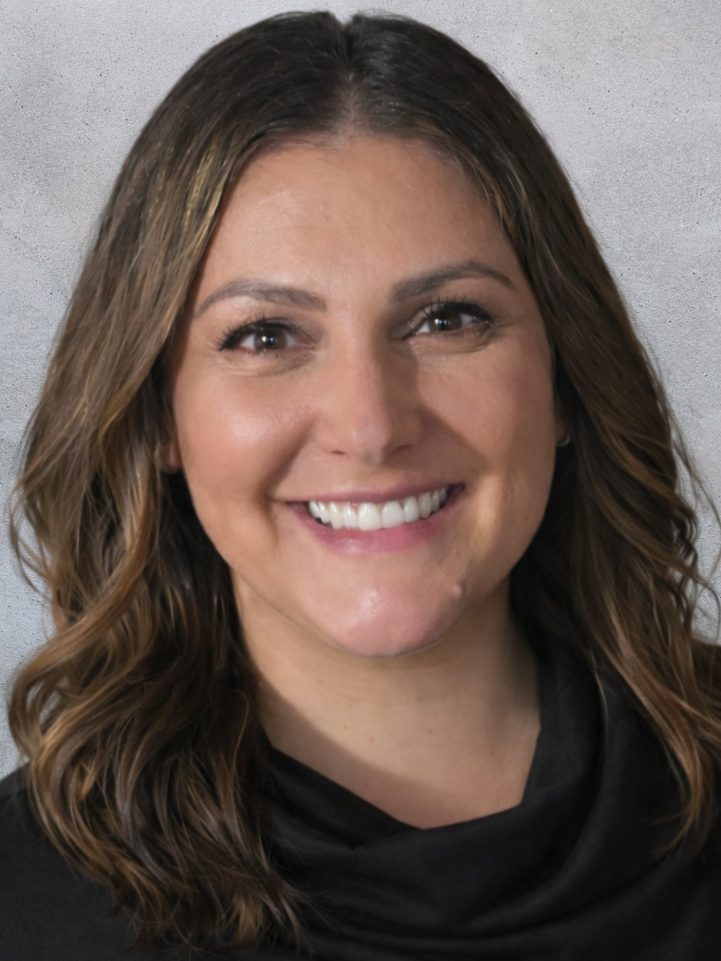
Layla Wohlfeiler, M.S., CCC-SLP is a Clinical Services Manager with Seabright School and Therapy Staffing. She brings over 15 years of experience as a Speech-Language Pathologist across school, pediatric, and tele-therapy settings. Layla draws on her deep knowledge of special education and virtual service delivery to guide clinicians through the realities of school-based practice. She loves collaborating and brainstorming with clinicians to set them up for success in their placements and works closely with districts to support their staffing needs and student outcomes. She takes pride in being a steady, knowledgeable presence clinicians and districts alike can turn to at any stage of their work.
DELIVERED TO YOUR INBOX MONTHLY